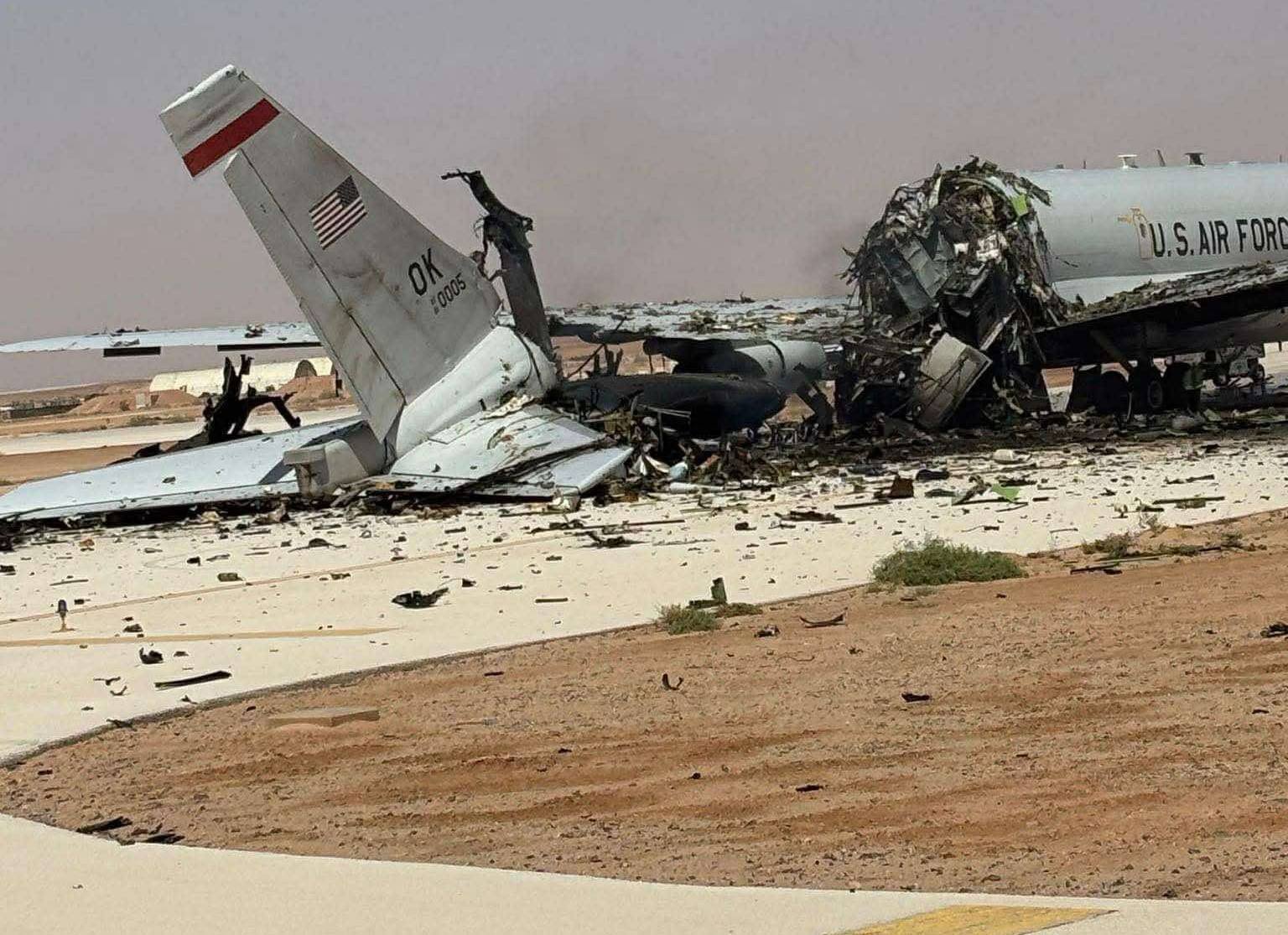
Analyzing the US Radar Plane Incident: Iran's Strategic Threat
The destruction of a US radar plane by Iranian forces, a hypothetical yet increasingly plausible scenario in the volatile Middle East, represents far more than a mere act of aggression; it signals a profound shift in regional power dynamics and raises critical questions about Iran's burgeoning military capabilities. Such an incident would instantly escalate geopolitical tensions, challenging established norms of engagement and forcing a comprehensive re-evaluation of security strategies for the United States and its allies. Understanding the strategic implications of a "Us Radar Plane Destroyed" event is crucial for anticipating future conflicts and ensuring regional stability.The Incident's Gravity: Unpacking the "Us Radar Plane Destroyed" Scenario
The potential loss of a US radar plane, such as an E-3 Sentry (AWACS) or an E-8 Joint STARS, would be an event of monumental significance. These aircraft are not just surveillance platforms; they are airborne command and control centers, providing critical real-time intelligence, battle management, and communications relay capabilities across vast areas. Their destruction would mean:- Loss of High-Value Asset: Each plane represents billions in development and deployment costs, embodying cutting-edge technology and years of strategic investment.
- Significant Casualties: These aircraft carry large crews, often dozens of highly trained personnel, making any downing a tragic loss of life and expertise.
- Intelligence Gap: The immediate aftermath would create a significant void in situational awareness, potentially blinding allied forces in a critical theater.
- Prestige and Deterrence Erosion: The successful targeting of such a sophisticated US asset would be a major propaganda victory for Iran and could embolden other adversarial actors globally.
Iran's Evolving Air Defense and Anti-Access/Area Denial (A2/AD) Capabilities
For Iran to successfully target and destroy a US radar plane, it would require a confluence of advanced military capabilities, particularly in the realm of air defense and electronic warfare. For a deeper dive into Iran's military advancements, you might find this related article insightful: US Radar Plane Destroyed: Iran's Growing Military Power. Historically, Iran's air defense has been a patchwork of older Soviet-era systems, some indigenous developments, and reverse-engineered technology. However, recent years have seen significant investment and advancement:Indigenous Development vs. External Acquisition
Iran has pursued a dual-track approach to bolstering its air defense. Domestically, it has developed systems like the Bavar-373, an indigenous long-range surface-to-air missile (SAM) system touted as comparable to the Russian S-300 or even S-400. Other systems, such as the Khordad 15 and Raad, are designed for medium and short-range engagements. These systems often incorporate sophisticated radar arrays, electro-optical targeting, and advanced command-and-control networks, all designed to detect, track, and engage stealthy or high-flying targets. The development of such systems highlights Iran's determination to achieve military self-sufficiency under sanctions.
Concurrently, Iran has also sought to acquire advanced foreign technology, particularly from Russia and China. While direct sales of top-tier systems like the S-400 have been complicated by international sanctions, there's always the risk of technology transfer, grey market acquisitions, or even domestic adaptation of components. The integration of various radar types – including active electronically scanned array (AESA) systems – and advanced data link networks would be crucial for establishing a robust integrated air defense system (IADS) capable of engaging a high-altitude, high-value target like a radar plane.
The Role of Electronic Warfare (EW) and Cyber Capabilities
Beyond kinetic engagement, electronic warfare plays a pivotal role. Disrupting a radar plane's communications, jamming its sensors, or spoofing its navigation systems could significantly degrade its operational effectiveness, making it a more vulnerable target. Iran has been actively developing its EW capabilities, recognizing their asymmetric potential against a technologically superior adversary. Similarly, cyber warfare could be employed to compromise ground control systems or even the aircraft itself, though this is a far more complex undertaking for an airborne platform.
Geopolitical Ramifications: A Paradigm Shift in Regional Security
The destruction of a US radar plane by Iran would send shockwaves across the Middle East and beyond, necessitating a fundamental rethinking of regional security architectures.- Immediate Escalation: Such an act would undoubtedly be perceived as a direct and severe provocation, almost certainly triggering a robust military response from the United States. The nature and scale of this response would dictate the trajectory towards broader conflict or de-escalation.
- Impact on Allies: US allies in the region, particularly Israel and the Gulf states (Saudi Arabia, UAE), would view Iran as an even greater and more direct threat. This could lead to increased demands for US security guarantees, accelerated arms acquisitions, and potentially closer military cooperation with the US to counter Iranian aggression.
- Challenging US Hegemony: For decades, US air and naval superiority in the region have been foundational to its diplomatic and military influence. A successful strike on a radar plane would demonstrate Iran's ability to contest this dominance, encouraging other regional and global adversaries to reassess their own strategies against US power.
- Global Implications: Major powers like Russia and China would carefully observe the US response and its effectiveness. This incident could influence their own military doctrines, arms sales, and strategic calculations regarding global power projection and anti-access/area denial strategies. It could also further destabilize global energy markets and shipping lanes.
Strategic Implications for US and Allied Operations
In the aftermath of a "Us Radar Plane Destroyed" event, the United States and its allies would be forced to adapt their operational doctrines and asset deployment strategies significantly.- Re-evaluation of ISR (Intelligence, Surveillance, and Reconnaissance) Tactics:
- Standoff Distances: Future radar plane operations would likely require increased standoff distances, moving these valuable assets further away from potential threat zones.
- Stealth and Counter-Stealth: Development and deployment of more stealthy ISR platforms or enhanced counter-stealth measures for existing assets would become a priority.
- Distributed ISR: A shift towards a more distributed network of smaller, less detectable ISR assets (e.g., advanced drones, low-orbit satellites) could mitigate the risk associated with a single high-value target.
- Enhanced Protection Measures:
- Escort Packages: Radar planes would require more robust and dedicated escort fighter jets, equipped with advanced electronic warfare capabilities.
- Onboard Defensive Systems: Investment in next-generation self-protection systems, including advanced jammers, decoys, and directed energy weapons, would be accelerated.
- Improved Threat Detection: Continuous development of systems capable of detecting and tracking advanced SAMs and anti-air missiles, including those with stealth characteristics or complex flight profiles.
- Rethinking Rules of Engagement: The threshold for preemptive action against perceived air defense threats would likely be lowered, and rules of engagement might be revised to authorize more aggressive countermeasures against hostile radar emissions or missile launches.
- Investment in Electronic Warfare and Cyber Defenses: A greater emphasis would be placed on developing and deploying offensive and defensive electronic warfare capabilities to jam enemy radars, disrupt communication, and protect friendly assets. Cyber defenses would also be bolstered to prevent similar attacks.
Practical Tips for Mitigating Future Threats:
- Diversify ISR Assets: Reduce reliance on single points of failure by employing a broader mix of platforms, including space-based, high-altitude, and smaller unmanned systems.
- Invest in Next-Gen EW: Prioritize research, development, and deployment of advanced electronic warfare systems capable of degrading even the most sophisticated IADS.
- Strengthen Cyber Resilience: Implement robust cybersecurity measures across all military networks and platforms to counter potential cyber-attacks.
- Maintain Overwhelming Air Superiority: Ensure that any operational zone for high-value assets is thoroughly sanitized of threats by maintaining a decisive advantage in fighter aircraft and air defense suppression capabilities.
- Diplomatic and Deterrence Strategies: Alongside military readiness, maintain strong diplomatic channels and clear deterrence postures to prevent escalation and communicate red lines effectively.