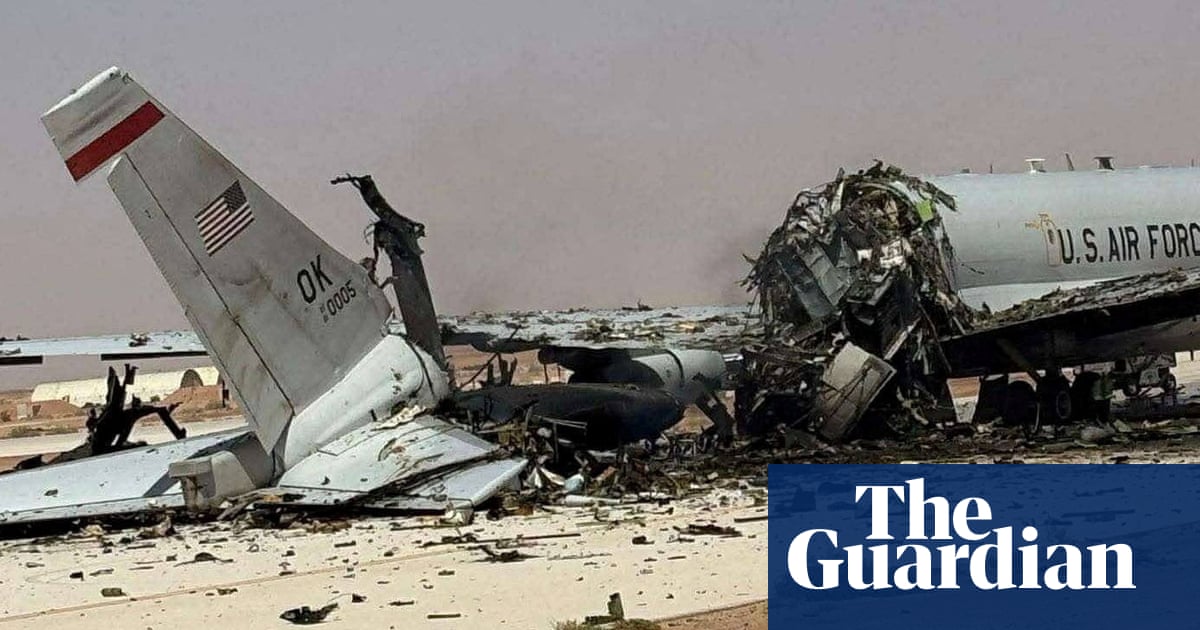
The Seismic Shift: Understanding the Implications of a US Radar Plane Being Destroyed
The recent reports of a US radar plane being destroyed have sent shockwaves across the geopolitical landscape, profoundly altering perceptions of military prowess and regional stability. This incident, centered on the main keyword
Us Radar Plane Destroyed, is not merely a localized conflict but a stark indicator of evolving power dynamics, particularly highlighting Iran's increasingly sophisticated military capabilities. The destruction of such a high-value asset represents a critical juncture, raising urgent questions about advanced air defense systems, intelligence gathering, and the precarious balance of power in one of the world's most volatile regions.
This article delves into the multi-faceted implications of this event, examining Iran's strategic advancements, the vulnerabilities exposed in modern air warfare, and the broader ramifications for international security. Far from a simple military engagement, this incident underscores a significant shift, demanding a thorough analysis of how nations approach deterrence, defense, and strategic engagement in an era of rapidly advancing military technology.
Iran's Evolving Arsenal: A Deeper Dive into Capabilities Behind the Incident
The capacity to successfully engage and destroy a sophisticated
US radar plane signifies a substantial leap in Iran's military capabilities, moving beyond conventional threats to challenge advanced reconnaissance and surveillance assets. For years, Iran has been aggressively investing in indigenous military development, focusing on areas designed to counter technologically superior adversaries. This incident, while specific in its outcome, reflects a broader trend of Tehran's strategic focus on asymmetrical warfare and advanced defense systems.
*
Advanced Air Defense Systems: Iran's acquisition and domestic production of advanced air defense systems have been a game-changer. While systems like the Russian-made S-300 have bolstered its layered defense, Iran has also showcased indigenous equivalents, such as the Bavar-373. These systems are designed to detect and intercept a wide range of aerial threats, including stealth aircraft and high-altitude targets like radar planes, which operate as crucial early warning and command-and-control hubs. The integration of sophisticated radar technologies, electronic warfare capabilities, and precision interceptors has evidently reached a critical threshold.
*
Drone Technology: Iran's prolific and rapidly advancing drone program presents another significant threat. From reconnaissance UAVs to armed drones capable of long-range strikes, these platforms offer cost-effective and deniable means of engagement. While direct responsibility for the radar plane incident might point to surface-to-air missiles, the preceding intelligence gathering and targeting could very well have been facilitated by advanced Iranian drones, highlighting their role in the kill chain.
*
Ballistic and Cruise Missile Development: While not directly implicated in an aerial engagement, Iran's extensive missile arsenal provides a powerful deterrent and strike capability. These missiles, continually improving in range, accuracy, and maneuverability, allow Iran to project power across the region and beyond, creating a multi-layered threat environment that complicates any military response.
*
Electronic Warfare and Cyber Capabilities: Modern warfare is not just about kinetic engagements. Iran has demonstrably invested heavily in electronic warfare (EW) capabilities, designed to jam, spoof, and disrupt enemy communications and radar systems. Such EW tactics could play a crucial role in blinding or confusing a radar plane, making it vulnerable to kinetic attack. Coupled with growing cyber warfare capabilities, Iran possesses tools to disrupt command-control networks and degrade adversary operations, potentially contributing to the success of such an intercept.
This multifaceted approach to military development underscores Iran's determination to establish itself as a formidable regional power. The successful engagement of a
Us Radar Plane Destroyed becomes a chilling demonstration of this growing military self-reliance and technological sophistication. This development raises
Iran's Strike on US Radar Plane: Key Questions for 2026 regarding future engagements and the efficacy of traditional deterrence strategies.
The Strategic Value and Vulnerability of Radar Planes
Radar planes, such as the E-3 Sentry AWACS (Airborne Warning and Control System) or the E-8 JSTARS (Joint Surveillance Target Attack Radar System), are the 'eyes and ears' of modern air warfare. Their destruction, as implied by the phrase
Us Radar Plane Destroyed, is a catastrophic loss not just of equipment but of critical capabilities:
*
Intelligence, Surveillance, and Reconnaissance (ISR): These aircraft provide unparalleled real-time intelligence on air and ground movements, tracking adversaries, and directing friendly forces. Losing such an asset creates a significant intelligence gap, severely impacting situational awareness.
*
Command and Control (C2): Radar planes act as airborne command centers, coordinating air operations, managing air traffic, and relaying vital information to ground and naval forces. Their removal can disrupt an entire theater's operational coherence.
*
Early Warning: With their powerful radar arrays, these planes can detect threats from vast distances, providing crucial early warning of incoming missiles or hostile aircraft, enabling defensive measures to be taken. Their destruction removes this protective layer.
The incident highlights a critical vulnerability. While designed to operate at safe distances, the increasing range and sophistication of modern air defense systems, coupled with potential electronic warfare attacks or coordinated drone assaults, can significantly extend the threat envelope. This forces military planners to re-evaluate operational doctrines, deployment strategies, and protective measures for these invaluable assets. The implications are far-reaching, as
Analyzing the US Radar Plane Incident: Iran's Strategic Threat becomes an imperative for defense analysts globally.
Navigating a More Dangerous Geopolitical Landscape
The destruction of a
Us Radar Plane Destroyed incident serves as a stark reminder of the heightened risks in the Middle East and the broader global arena. This event intensifies existing geopolitical tensions and demands a re-evaluation of established norms and deterrence strategies.
*
Escalation Risks: Such an incident inherently carries a high risk of escalation. Responses, whether military, diplomatic, or economic, must be carefully calibrated to avoid spiraling into a broader conflict. Understanding the red lines and motivations of all parties becomes paramount.
*
Re-evaluating Deterrence: For decades, the technological superiority of certain military powers served as a significant deterrent. However, incidents like this suggest that the gap is narrowing, compelling nations to rethink what truly constitutes effective deterrence in the face of increasingly capable state and non-state actors.
*
The Future of Regional Security: The incident undoubtedly emboldens Iran and its proxies, potentially leading to more assertive actions in the region. Neighboring states, concerned about their own security, may seek to bolster their defenses or forge new alliances, further complicating regional stability.
*
The Role of International Diplomacy: In this volatile environment, robust diplomatic efforts are more critical than ever. Channels of communication, even indirect ones, must be maintained to de-escalate tensions, clarify intentions, and prevent miscalculations that could have catastrophic consequences.
For policymakers and citizens alike, it's crucial to understand these complex geopolitical shifts.
Practical Tip: When analyzing such events, look beyond immediate headlines. Consider the long-term implications for global trade routes, energy prices, and international alliances. Understand the historical context of regional rivalries and the strategic objectives of the major players involved. Diversify your information sources to gain a balanced perspective.
The New Age of Air Combat and Asymmetric Threats
The success in downing a sophisticated
Us Radar Plane Destroyed asset underscores a new reality in air combat. Gone are the days when only a handful of nations could pose a credible threat to advanced airborne platforms. The proliferation of sophisticated anti-access/area denial (A2/AD) capabilities means that even militaries with fewer resources can develop significant defensive and offensive punch. This incident specifically highlights:
*
The Importance of Electronic Countermeasures: It suggests that advanced radar planes might not be as invulnerable as once thought, especially when confronted with sophisticated electronic jamming, deception, or coordinated missile strikes. This will undoubtedly spur renewed investment in electronic protection systems and stealth technologies.
*
Adaptability of Adversaries: Iran’s military doctrine has long focused on asymmetric capabilities to counter superior conventional forces. This event shows their capacity to adapt and innovate, effectively leveraging technology to target high-value assets and create strategic dilemmas for adversaries.
*
Challenges for Surveillance: The incident will force a re-evaluation of how ISR missions are conducted in contested airspace. This might involve greater reliance on space-based assets, smaller and stealthier drones, or new doctrines for operating manned surveillance aircraft in high-threat environments.
Ultimately, the event pushes the envelope on what is considered a 'safe' operating environment for advanced military platforms, forcing a fundamental rethink of tactical deployments and strategic risk assessments.
Conclusion: A New Chapter in Geopolitical Risk
The implications of a
Us Radar Plane Destroyed incident are profound and far-reaching, signaling a significant shift in the strategic military balance, particularly in the Middle East. It serves as a powerful testament to Iran's growing military capabilities and its determination to challenge established power structures. This incident compels a global re-evaluation of air defense strategies, intelligence-gathering vulnerabilities, and the complex calculus of regional deterrence. As nations grapple with these new realities, the imperative for both robust defense innovation and sustained diplomatic engagement becomes undeniably clear. The world watches closely, understanding that the aftermath of such an event could redefine international security for years to come.